


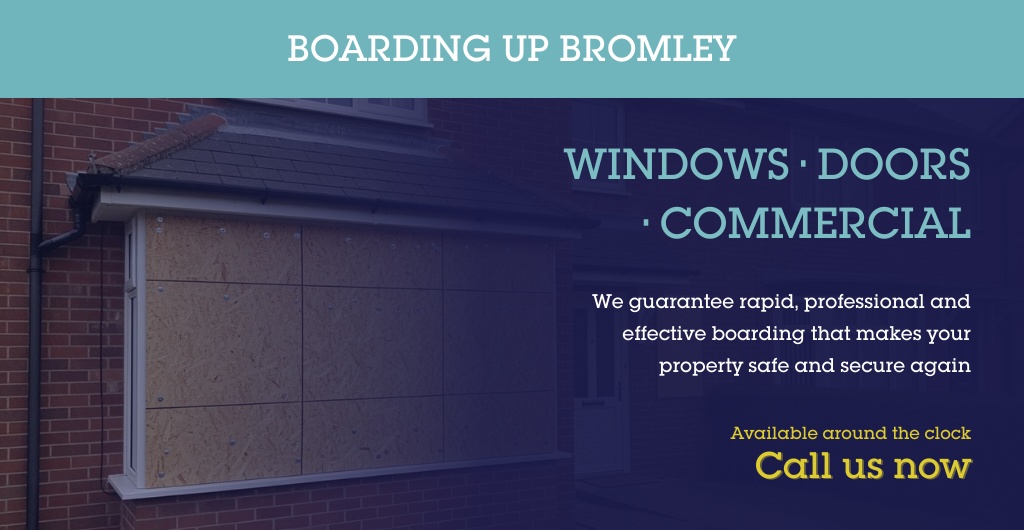
Boarding Up for Vacant Properties in Bromley (BR1–BR8)
A vacant property is an easy target. Even when nothing “valuable” is left inside, an empty flat, house, shop or unit can still attract opportunists, lead to repeat break-ins, or suffer from weather damage once a window or door has been compromised.
At Boarding Up Bromley, we provide boarding up for vacant properties across the BR postcode area—from central Bromley and Beckenham through to Orpington, Swanley and the more rural edges around Downe and Chelsfield. Whether you’re a landlord between tenancies, an executor managing an estate, or a facilities manager responsible for an empty commercial unit, we’ll help you secure the building properly and document the work for your insurer or asset manager.
If you need urgent help after a break-in or vandalism, see our emergency boarding up page and call 020 4634 7872.
Why vacant properties in Bromley need extra attention
Bromley has a real mix of building types—Victorian and Edwardian houses split into flats near transport links, 1930s semis and maisonettes, and modern developments around town centres. Vacant buildings can sit unnoticed, especially where access is through side passages, rear service roads, or communal entrances.
Common local risk factors we see include:
- Repeat attempts after an initial incident (once someone has tested the door/window, they may come back)
- Hidden rear access (gardens backing onto footpaths, alleys, or railway land)
- Weather exposure (a single broken pane can quickly become water ingress and internal damage)
- Neighbour complaints / reputational risk (boarded properties attract attention if not done neatly and securely)
- Insurance conditions (many policies require “reasonable precautions” and evidence the property was secured)
We’re not loss adjusters or legal advisors, but we can provide the practical documentation insurers typically ask for—photos and an itemised invoice—so your claim process is smoother. See insurance claims support for guidance on what to keep and what to send.
Typical scenarios: why empty homes and units end up needing boarding
Vacant property boarding isn’t always about “crime”. It’s often about keeping a building stable and defensible while you arrange permanent repairs, probate, sale, or refurbishment.
Between tenancies (landlords and letting agents)
- A tenant moves out and a rear window is found cracked or not closing properly
- Keys are missing and the door is insecure
- The property is being redecorated and trades have left openings vulnerable overnight
For landlord-focused security, our vacant property boarding approach can be paired with door boarding or temporary steel doors where appropriate.
Probate / estate properties
We’re often asked to secure a property after a bereavement when the house is unoccupied, curtains are open, and there’s a visible lack of activity. Even “quiet” streets can experience opportunistic entry—especially if a ground-floor window is already weak or a shed has tools that can be used to force entry.
Post-break-in on an empty building
If a vacant property has already been entered, the priority is to prevent a second visit. We’ll assess the damage and choose fixings that can’t simply be undone from the outside.
Related help: burglary repairs and boarding.
Vandalism or targeted damage (especially empty commercial units)
Empty units can suffer smashed glazing, kicked-in panels, or damage from thrown objects. In mixed-use areas—where residential blocks sit over retail parades—this can become a safety issue for passers-by and neighbouring occupiers.
Related help: vandalism repair and boarding and shopfront boarding.
Storm damage and weather exposure
High winds can dislodge loose panels, break old glazing, or shift a poorly maintained door. Once the building envelope is breached, rainwater gets in fast.
Related help: storm damage boarding and roof boarding.
Fire or flood (securing after the incident)
After a fire, doors and windows are often forced for safety access, and glazing can crack from heat. After a flood, timber frames may swell and no longer close properly. In both cases, the main goal is security and weatherproofing, not remediation.
Related help: fire damage securing and flood damage securing.
How we secure vacant properties (and what makes it different)
Vacant property work is often medium-term, not just “board it tonight and remove it tomorrow”. That means fixings, materials, and the overall finish matter.
1) A quick but careful assessment
We start by looking at:
- What’s actually compromised: glazing, frame, lock area, hinges, or surrounding masonry
- Whether a non-destructive method is possible (especially if you’re planning repairs)
- Whether the site will be unattended and for how long
- Any access issues (rear alleys, shared entrances, scaffolding, height)
If the frame is too damaged for a neat, non-destructive approach, we’ll explain the options before proceeding.
2) Choosing the right method: plywood, OSB, steel door, or screens
We use different solutions depending on risk level and duration:
- 18mm exterior-grade plywood for robust window and door boarding where strength matters most
- 12mm OSB can be suitable for smaller openings or lower-risk locations (we’ll advise honestly)
- Anti-tamper fixings where the property is likely to be targeted again—important because standard screws can be removed from outside
- Temporary steel doors for vacant properties with repeated forced entry or where you need controlled access for trades
- Security screens (Sitex-style) for longer-term voids where ventilation/light may be needed and repeated access is expected
Relevant services:
3) Fitting for security (not just coverage)
A “board over the glass” job can be undone if it’s poorly fixed or the edges can be prised. For vacant property boarding we focus on:
- Proper overlap and edge protection to reduce leverage points
- Fixings positioned to resist pull-out and prising
- Maintaining safe egress considerations where relevant (especially in communal areas)
- Reducing rattling/noise (a common complaint from neighbours)
4) Making it insurable and manageable
Many vacant properties are managed by agents, housing teams, or estates—so we aim to make the job easy to administer:
- Time-stamped photos of each elevation/opening secured
- An itemised invoice and clear description of materials/method used
- Notes on any additional vulnerabilities spotted (for example, a weak rear gate or damaged frame)
If you’re dealing with a claim, our insurance claims guidance explains what insurers usually request and what to do before and after we attend.
Common vacant property types we handle in Bromley
Empty houses and bungalows
Often 1930s semis or larger family homes where side access leads to a vulnerable rear door or kitchen window. We commonly board patio doors, rear casements, and ground-floor bays.
Vacant flats and maisonettes
Access can be tricky—communal doors, shared stairwells, restricted parking, and neighbours concerned about noise or appearance. We keep the job tidy and safe in communal areas.
See also: residential boarding up.
Empty shops and high-street units
Shopfront glazing and rear service doors are frequent targets. If the unit is on a parade, you also need to consider public safety and keeping the frontage presentable.
See also: commercial boarding up and shopfront boarding.
Void properties awaiting refurbishment or sale
These often need a stronger, longer-term approach—temporary steel doors or screens—because multiple trades and surveyors require access over weeks or months.
Where we work: Bromley and the BR postcodes
We cover vacant property boarding across BR1–BR8, with regular call-outs in and around:
- boarding up Bromley (BR1)
- boarding up Beckenham (BR3)
- boarding up Shortlands (BR2)
- boarding up Chislehurst (BR7)
- boarding up Orpington (BR6)
- boarding up Swanley (BR8)
You can browse the full list on our areas we cover page.
Micro case study: securing an empty house between sale stages (BR1)
A seller’s property in Bromley (BR1) was empty while conveyancing progressed. After a storm, a rear ground-floor window pane cracked and the frame no longer latched properly. The concern wasn’t just rain—once a window looks compromised, it can invite opportunistic entry.
We attended, photographed the damage for the owner’s records, and installed 18mm exterior-grade plywood using anti-tamper fixings so it couldn’t be removed externally. We also advised the owner to keep a note of when the property was last occupied and to notify their insurer that the building was secured.
The result: the property was left weather-tight and significantly harder to access until a glazier could replace the unit.
What to do right now if your vacant property is insecure
- If a crime has occurred, call the police first and obtain a crime reference number.
- Take a few photos if it’s safe (don’t enter if you suspect someone is inside).
- Call us with the basics: address/postcode, what’s damaged (door, window, shopfront, rooflight), and whether the property is currently accessible.
- Notify your insurer early, especially if your policy has vacant-property terms.
For urgent help, go to emergency boarding up and call 020 4634 7872.
FAQs: Vacant property boarding up in Bromley
Can you secure a vacant property if I’m not on site?
Often, yes—if access can be arranged safely (keyholder, agent, caretaker, or secure key safe). If we can’t gain access, we can still sometimes secure exposed openings externally, but we’ll be clear about what is and isn’t possible.
Do you install temporary steel doors for empty houses or flats?
Yes, where it’s appropriate. A temporary steel door can be a strong option after repeated forced entry or where a timber door/frame is too damaged to secure reliably. We’ll talk you through whether boarding, a steel door, or screens are the best fit.
Related: door boarding up.
Is boarding up covered by insurance for vacant properties in Bromley?
It depends on your policy and the circumstances (burglary, storm, vandalism, etc.). We’re not insurers, but we can provide documentation—photos and invoices—that insurers commonly request. See insurance claims support.
How long can boarding stay in place on a vacant property?
Boarding can stay in place as long as needed, but the right approach depends on duration and risk. For longer void periods, security screens or temporary steel doors can be more practical, especially if trades need regular access.
Can you board up shops as well as houses?
Yes. We secure residential, commercial, and mixed-use properties across Bromley and the BR postcodes. For retail glazing and larger frontages, see shopfront boarding and commercial boarding up.
Ready to secure a vacant property in Bromley?
If you’re responsible for an empty property—whether it’s a flat between tenants, an estate property, or a vacant commercial unit—we’ll help you make it safe, secure, and manageable until permanent repairs are completed.
Ready to get started? Call 020 4634 7872 or email us for a free, no-obligation quote.
